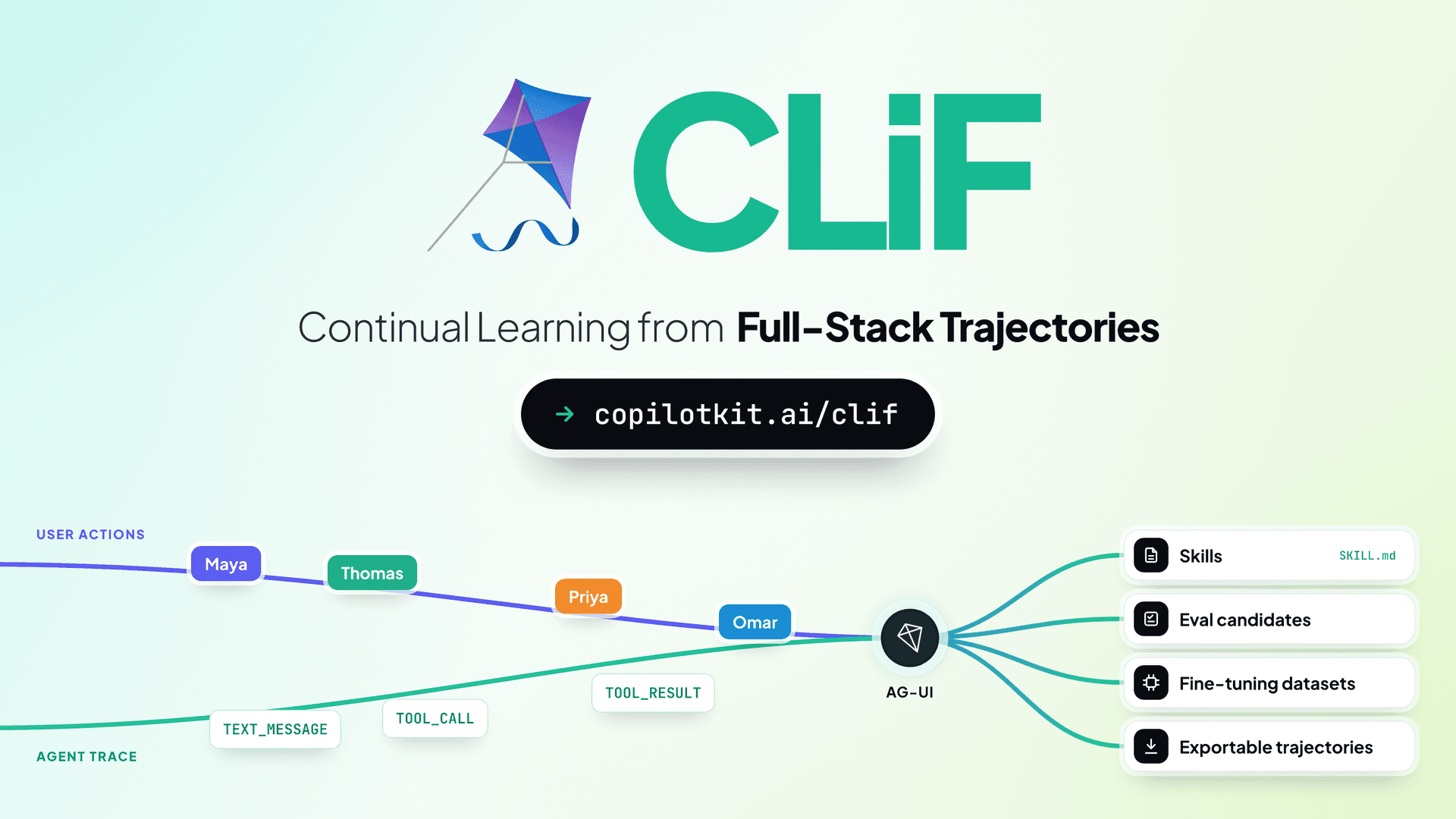
Today we're releasing CLiF - Continual Learning from Full-Stack Trajectories in early access!
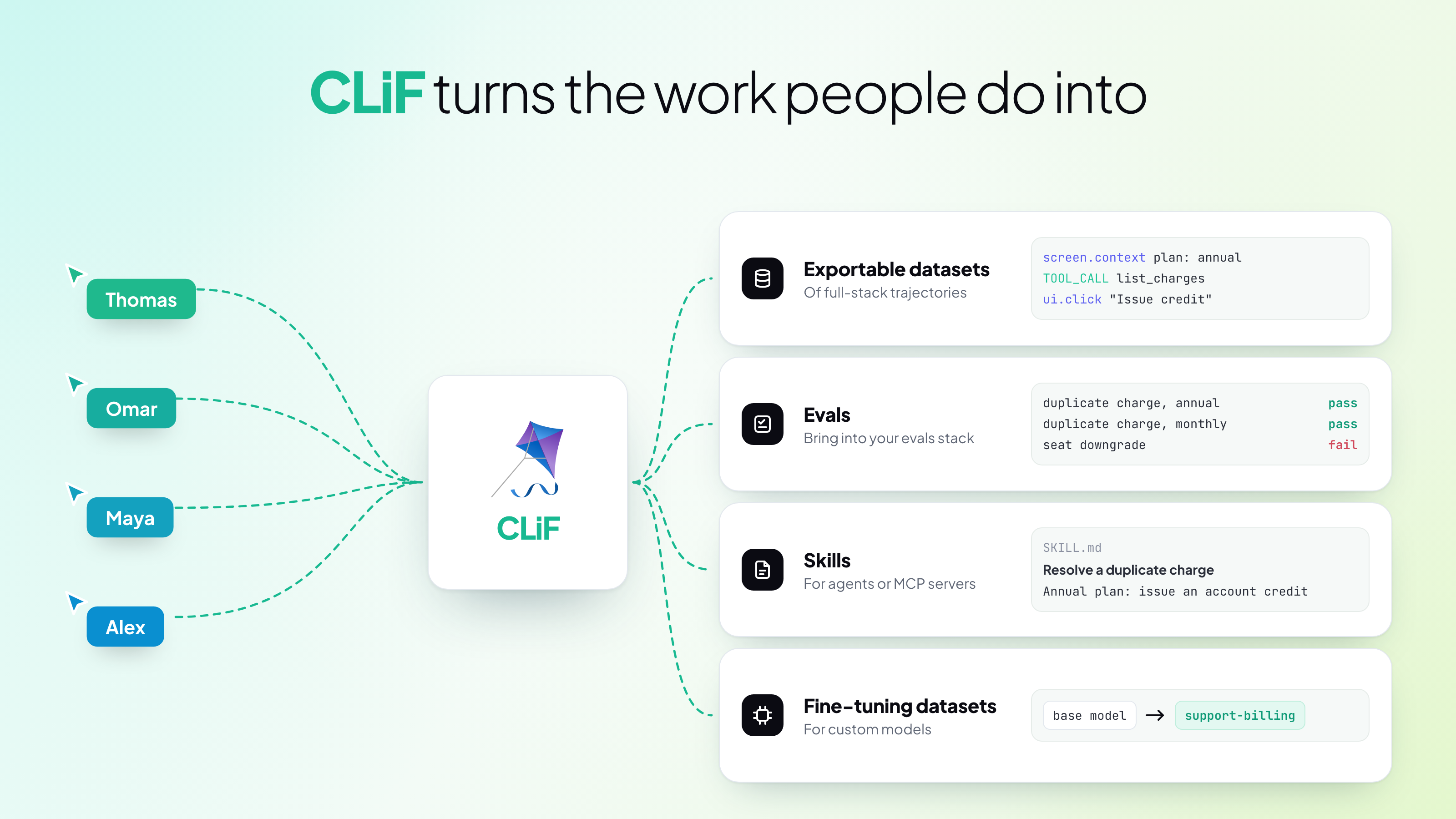
CLiF turns the work your customers and employees already do in your product into the skills, evals, and fine-tuning data your agents need to do that same work reliably in production. It's fully self-hostable, and everything it produces is yours to export.
Your agents could already learn from their own conversations in CopilotKit Intelligence. CLiF now sees both sides of the work (agent trace and user actions) through the AG-UI protocol.
To see what CLiF can do for your product, book a demo, and our engineers will run it live on your use case.
Here's why we built it, and why every agentic product will need full-stack trajectories.
Agents like Claude and Codex now take on whole tasks by themselves. Your users want the same in your product, from your built-in agent or any external agent they bring.
But even agents using top-tier models like Fable and Astra struggle to carry out complex, end-to-end tasks in your product consistently enough to deploy, at a cost and speed that make sense.
At companies shipping agents at scale, the pattern is the same. You grind out evals for the flows that matter most, often thousands of cases, each written by hand. Then you improve the agent bit by bit until it passes enough of them to go live.
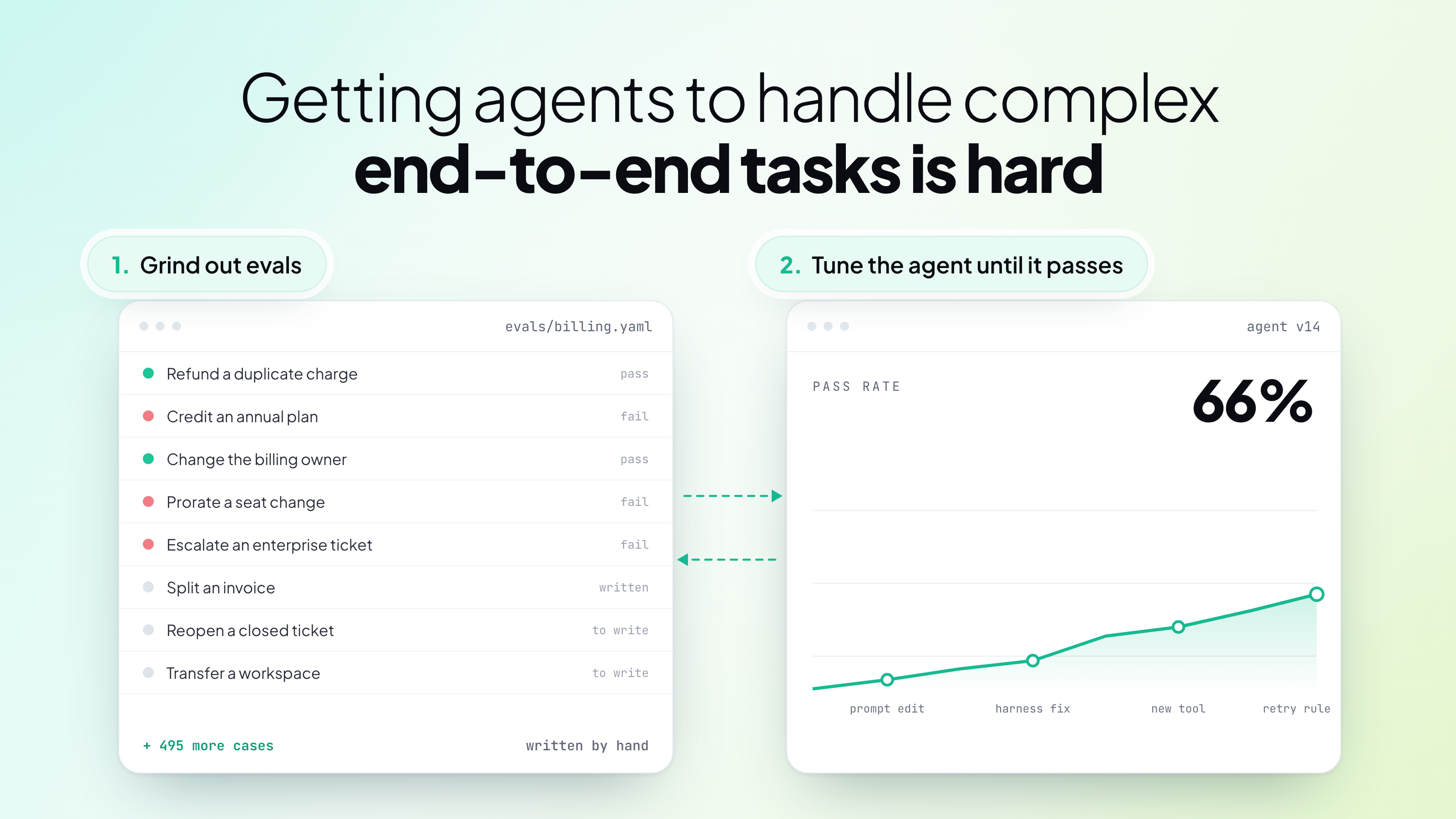
That work is slow and expensive:
Even after launch, users find themselves nudging the agent. Guiding it, correcting it, adding context it was missing. Then the next conversation starts, and it needs the same help again.
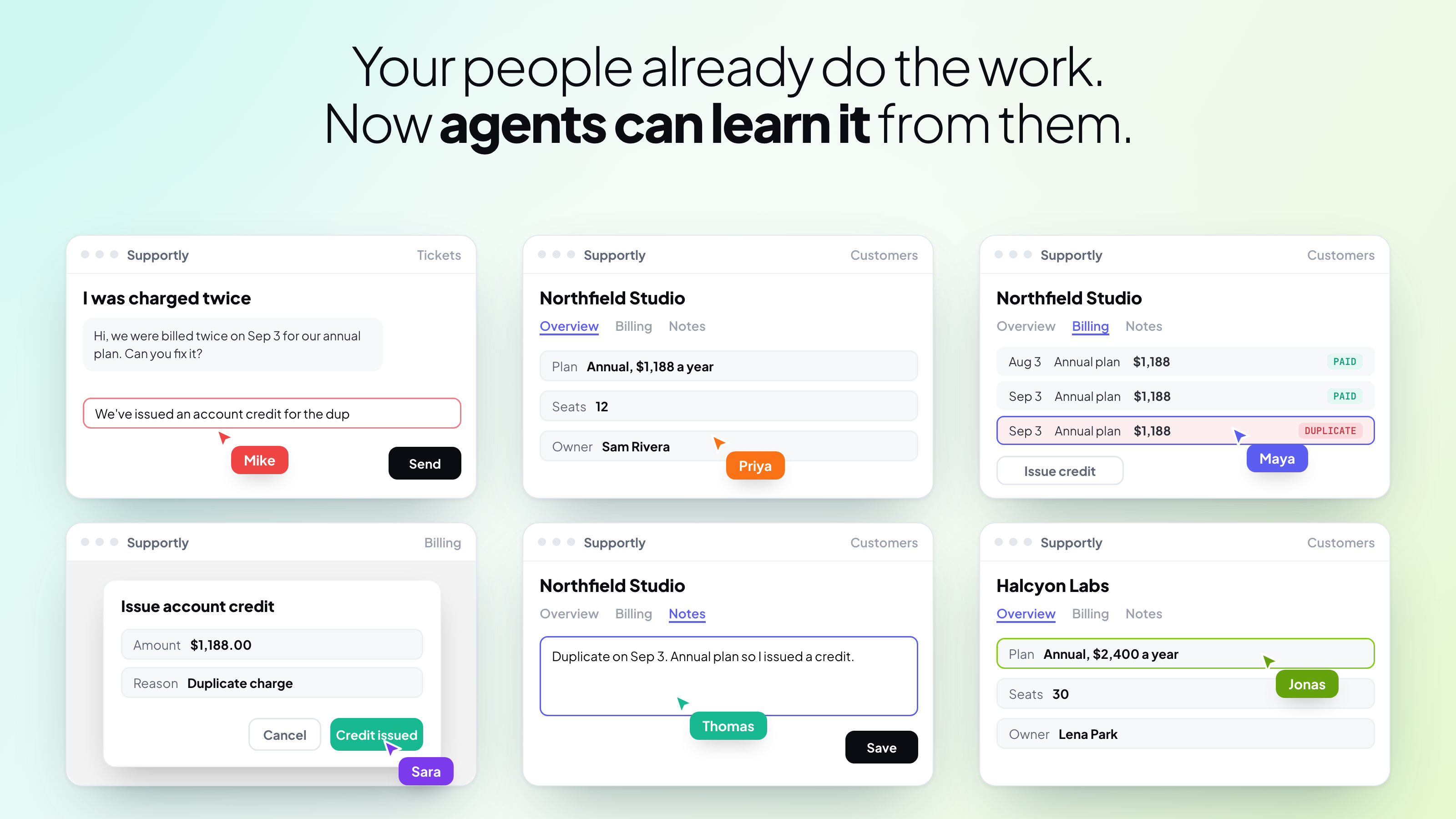
Meanwhile, the people using your product do this exact work every day.
Your customers and employees already know which actions to take, and in what order, to get the job done. They've done it hundreds of times. Your agent has to deduce all of that from prompts, skills, and hundreds of tools and APIs, so it guesses, retries, or hands the task back.
Say you run a support platform. A rep gets a ticket: "I was charged twice." They check the plan, find the duplicate charge, and since the customer is on an annual plan, they issue an account credit instead of a refund, because that's what their team does. No doc or prompt says so.
You could add that rule to a prompt. But there are hundreds like it, and you only find the missing ones when the agent gets them wrong.
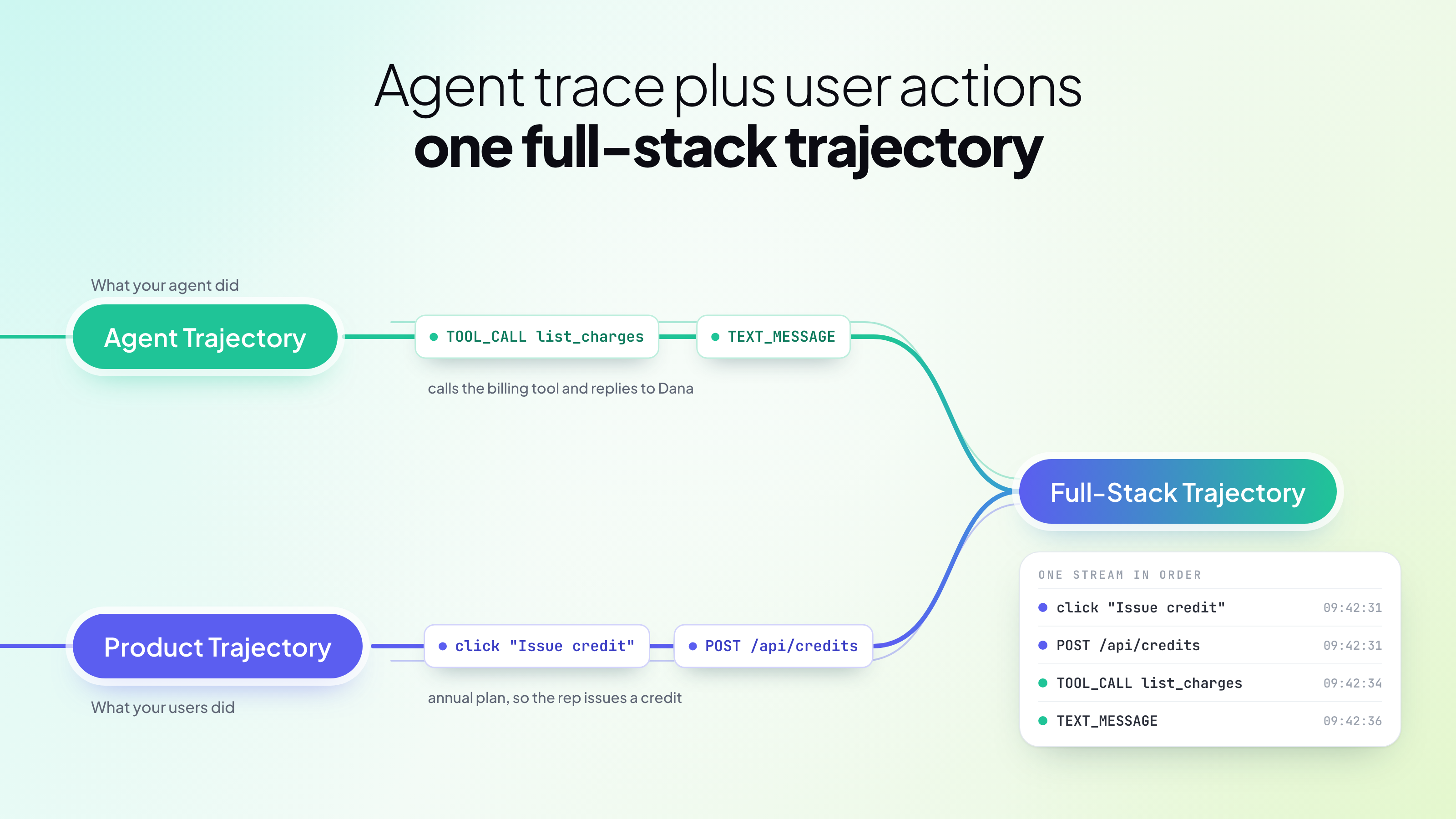
Products already record clicks, funnels, and session replays for people reading dashboards. To teach an agent the job, you need trajectories, captured as they happen: the full record of every action taken to complete a task, whether by a person or an agent.
In your product, that's a product trajectory: every click, API call, and agent conversation behind a task.
With product trajectories:
By hand, you would make one or two fixes a day, usually after a customer has already complained. Teams using product trajectories can see a significant drop in repetitive tasks, up to 80%, within the first two weeks.
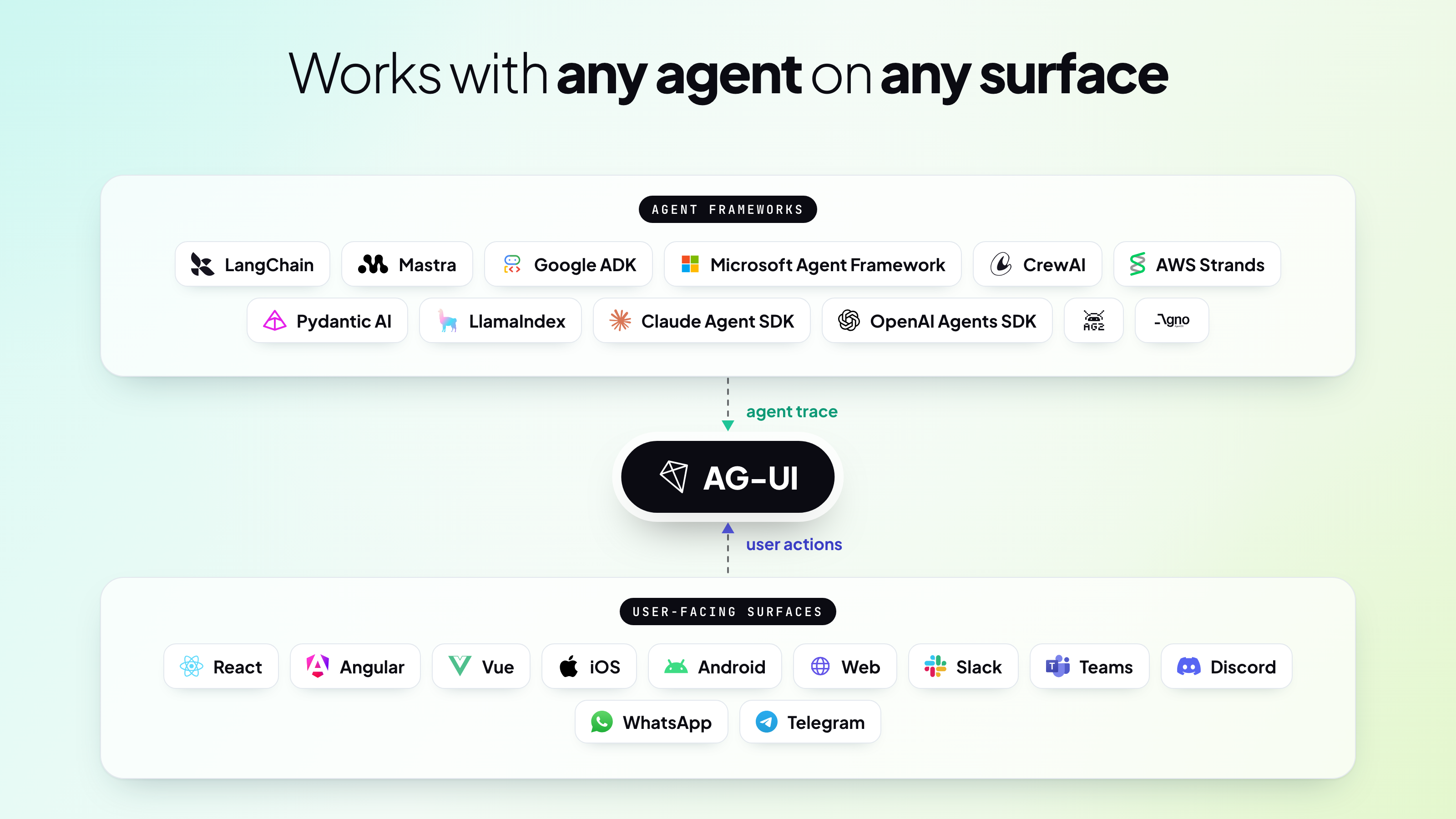
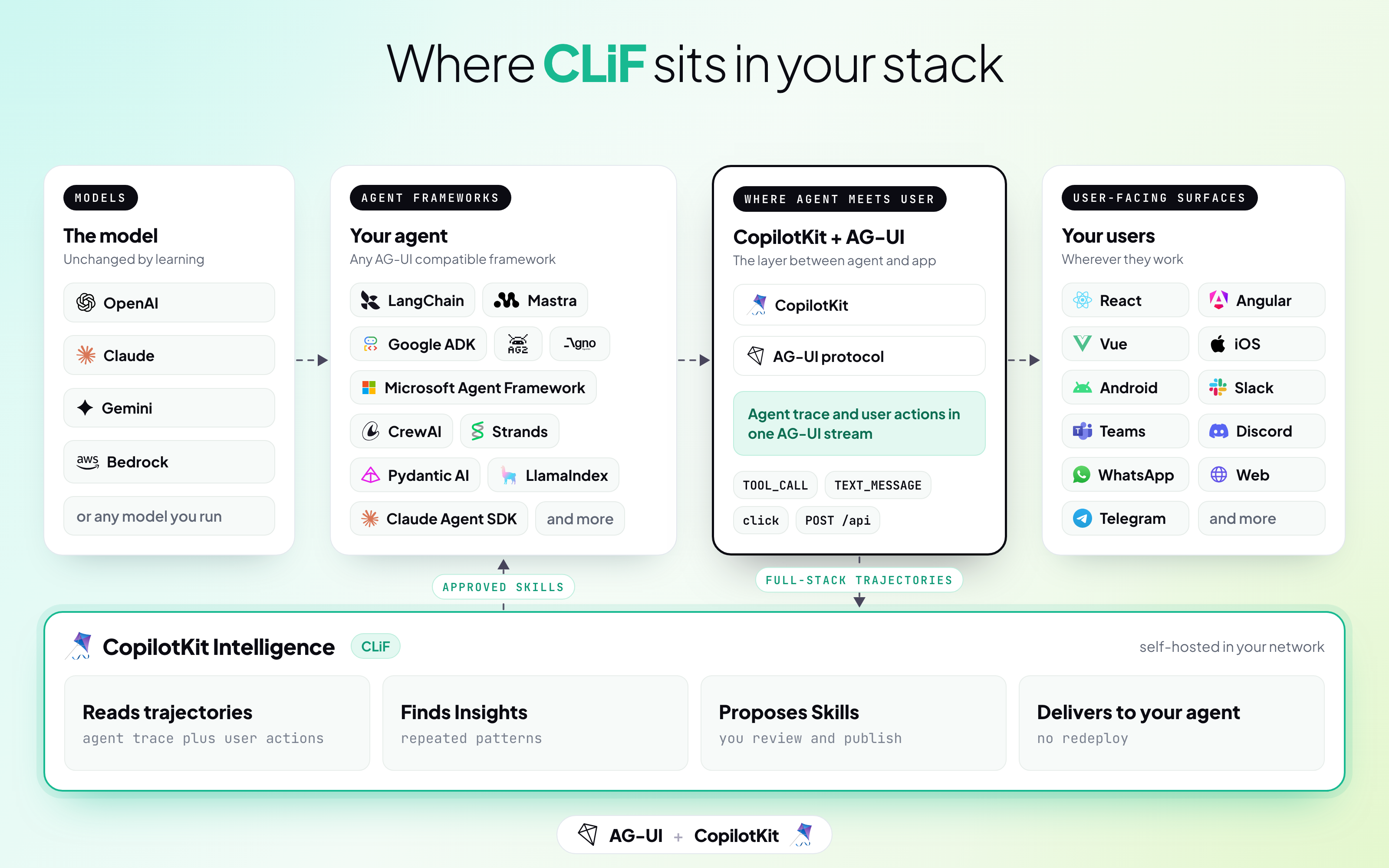
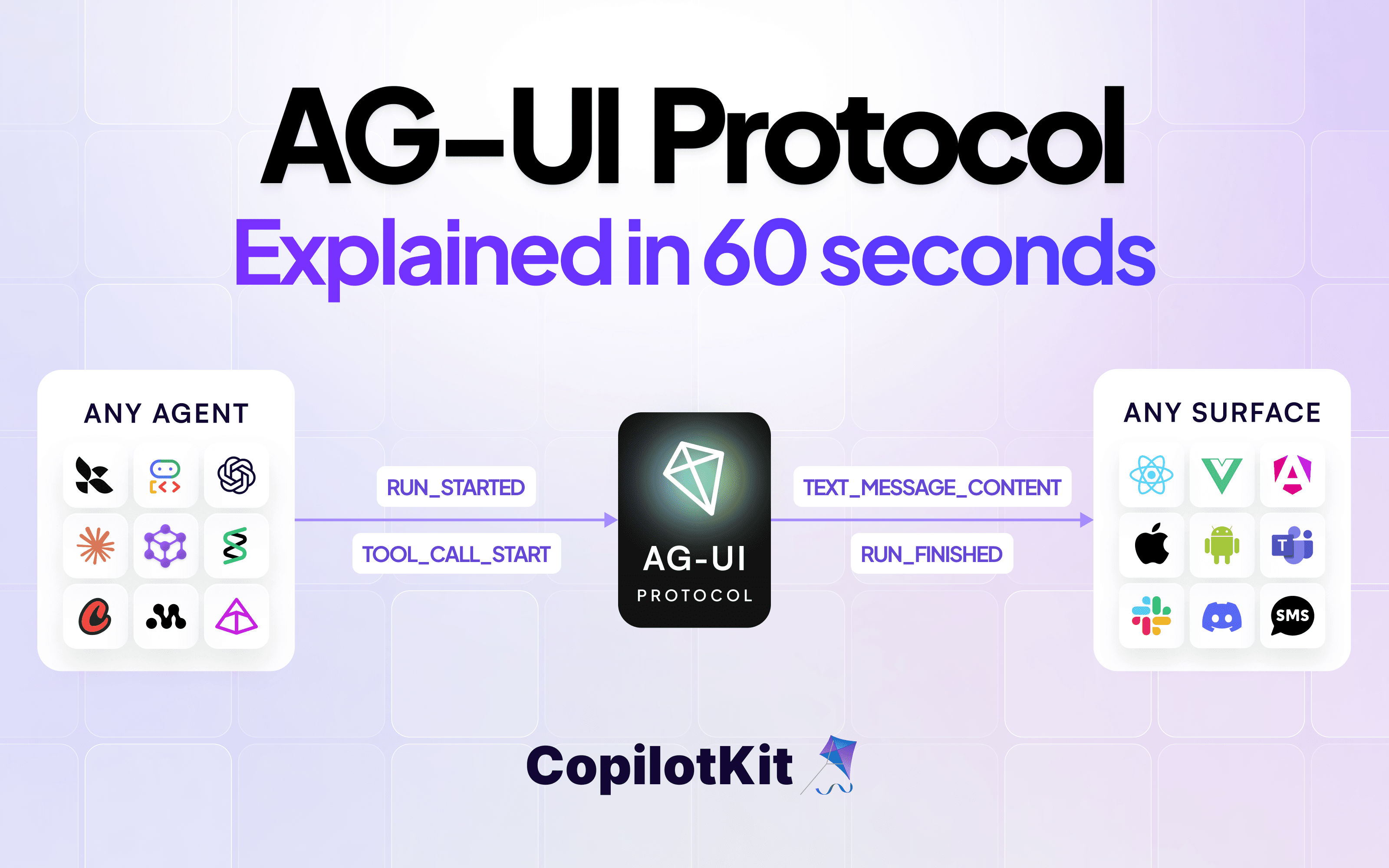
CLiF is part of CopilotKit Intelligence and learns from full-stack trajectories captured over AG-UI (Agent-User Interaction Protocol). AG-UI is the open protocol that connects agents to user-facing apps, supported by Google, Microsoft, Amazon, and most of the ecosystem.
AG-UI sits between your agent and your users on any surface, so it sees both sides of the work:
Together, that's a full-stack trajectory.
Because it runs on AG-UI, CLiF works with any agent harness and any model under the hood, whether your agent lives in your web app, mobile, Slack, or Teams.
CLiF reviews new trajectories on a schedule and finds the patterns, including the friction people silently work around. That friction often repeats across thousands of sessions and shows your agent exactly what to learn next.
CLiF turns those patterns into proposed skills, and once you approve them, they reach your agent without redeploying.
Skills are where it starts. From there, we want every team to own the full cycle:
See how CLiF works on a real product at copilotkit.ai/clif.
CLiF turns them into:
All of it works with your existing observability and evals stack.
The more your product gets used, the more of its work your agents can take on.
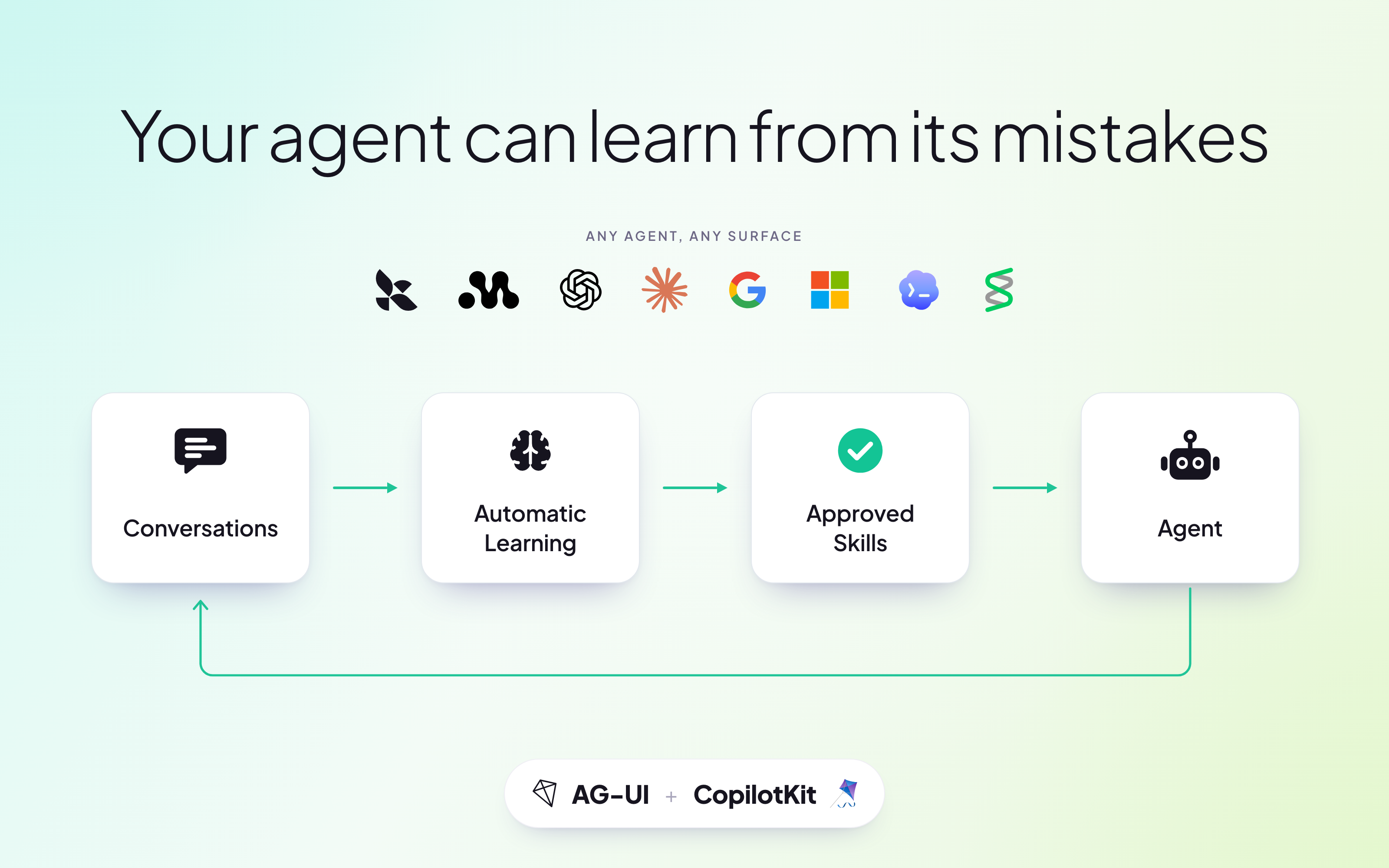
Every conversation with your agent is an agent trajectory, stored in AG-UI Streams: the messages, tool calls, generative UI, state, and more. When a user corrects the agent, asks for a different format, or adds context it was missing, that becomes a signal CLiF can learn from.
In CopilotKit Intelligence, you organize these trajectories into learning containers, for example, one for expense review and another for onboarding. A container only learns from its own threads, so a skill learned from expense reviews stays with expense reviews.
Every learning run surfaces Product Insights: the recurring requests and friction in those conversations, each linked to the threads behind it. When the evidence supports a reusable lesson, CLiF proposes it as a skill.
Each proposed skill is a SKILL.md you review, approve, and can ship with your project. Approved skills reach your agent without a redeploy, and each one stays readable and reversible.
Around that loop, Intelligence lets you:
SKILL.md files for any other agent.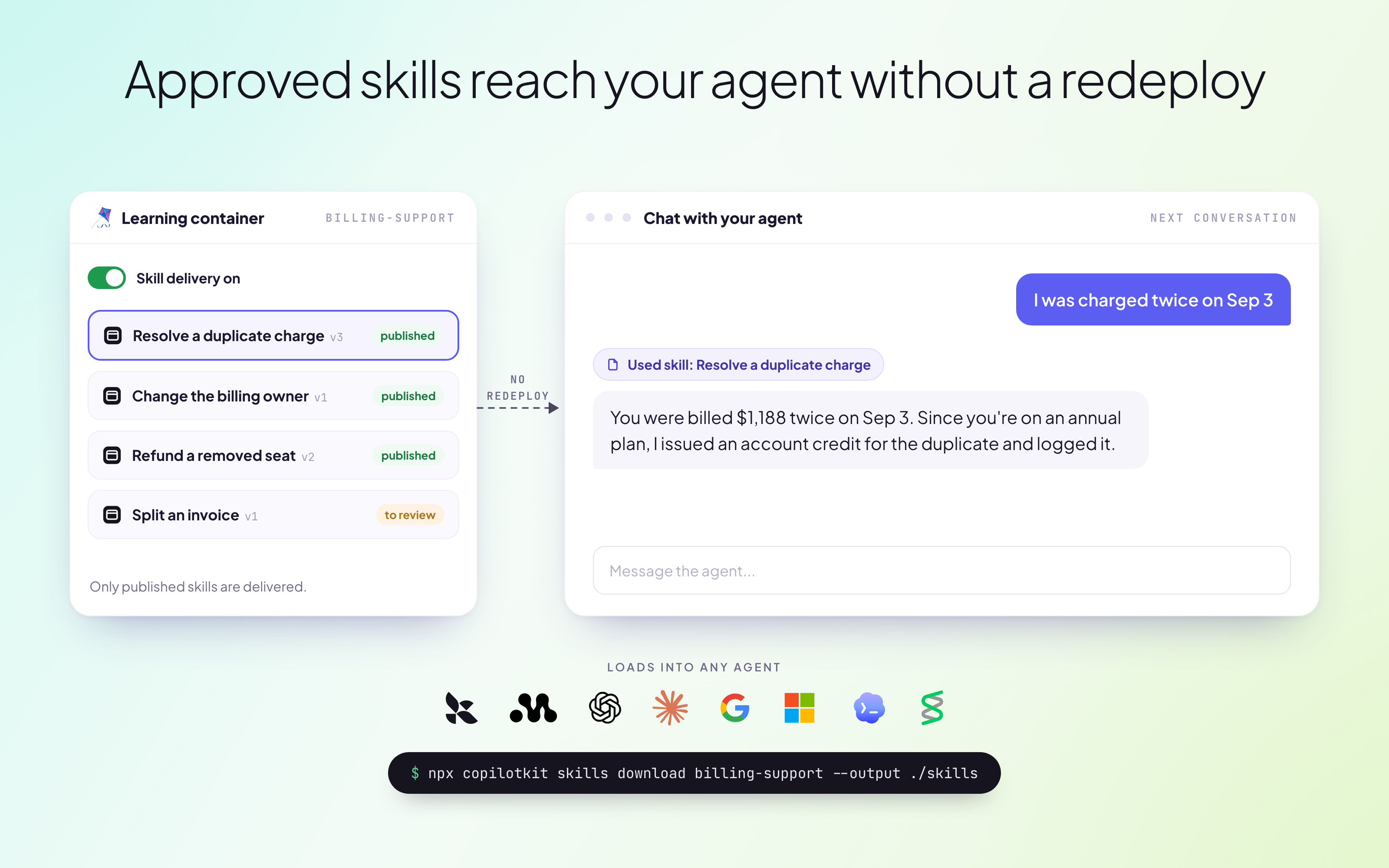
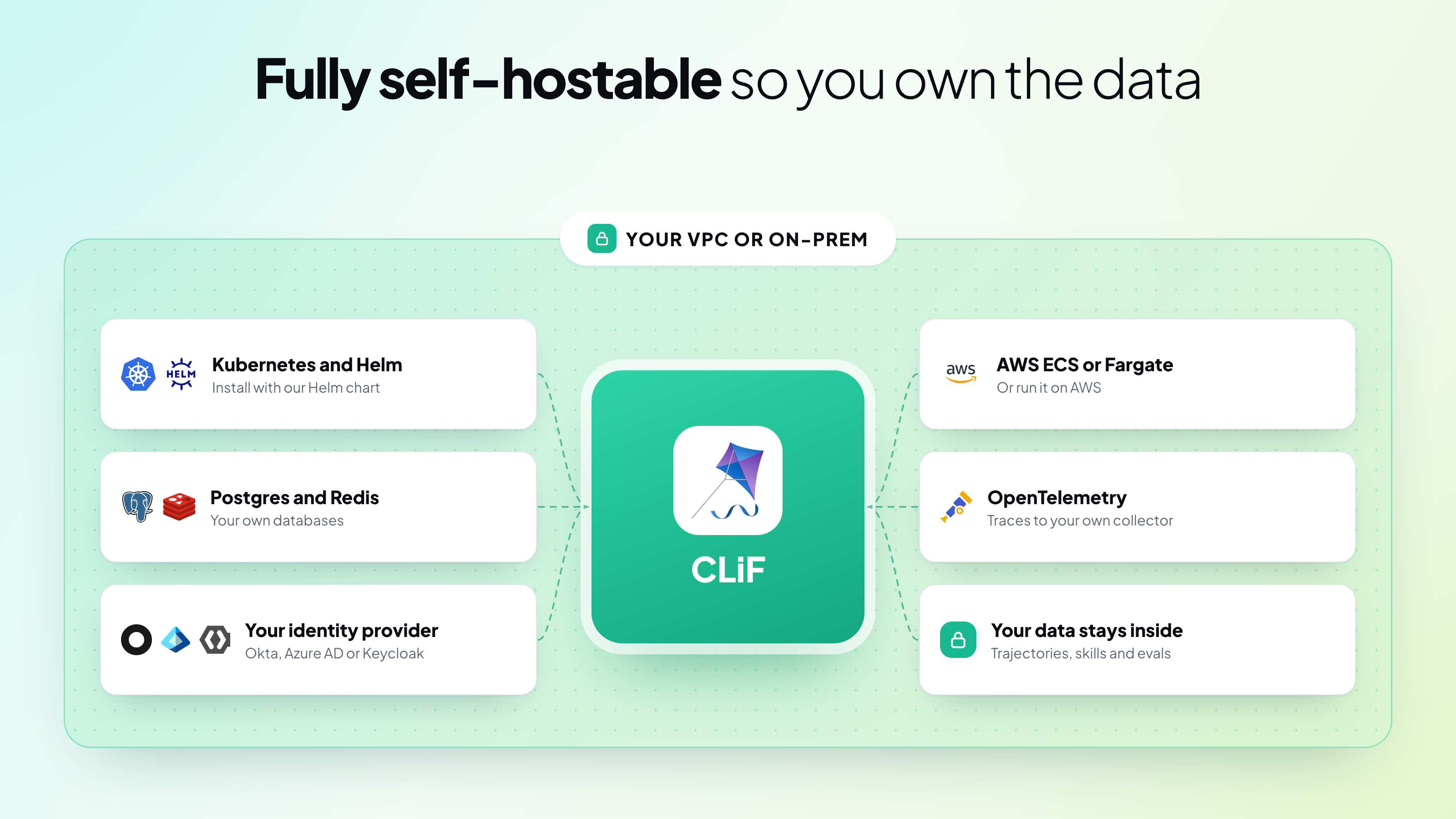
CLiF is fully self-hostable, so your data stays inside your own network. You can self-host CopilotKit Intelligence on your own Kubernetes cluster with our Helm chart, or on AWS ECS/Fargate.
You bring your own Postgres, Redis, and identity provider, such as Okta, Azure AD, or Keycloak, and keep secrets in the store you already use. Your trajectories, skills, and everything learned from them stay inside your VPC or on-prem. You can also send traces to your own OpenTelemetry collector.
Learning from agent trajectories also runs on our managed cloud for the fastest setup.
Our engineers can help you set it up. If you're planning an enterprise self-hosted deployment, book a call and we'll walk through it with you.
Learning from agent trajectories works today, and product trajectories are in early access.
Want to see CLiF on your product? Book a demo, and we'll take your use case and show how full-stack trajectories generate the exact evals and skills to get your agents' success rates above the line.
We're also hosting a live session on CLiF on October 15 at 9 AM PT. Sign up here.
To learn more:
The agentic ecosystem is moving from agent trajectories to full-stack trajectories. The products whose agents learn from how work actually gets done will pull ahead.
Follow CopilotKit on Twitter for updates. If you get stuck, reach out in the CopilotKit or AG-UI communities.
Subscribe to our blog and get updates on CopilotKit in your inbox.